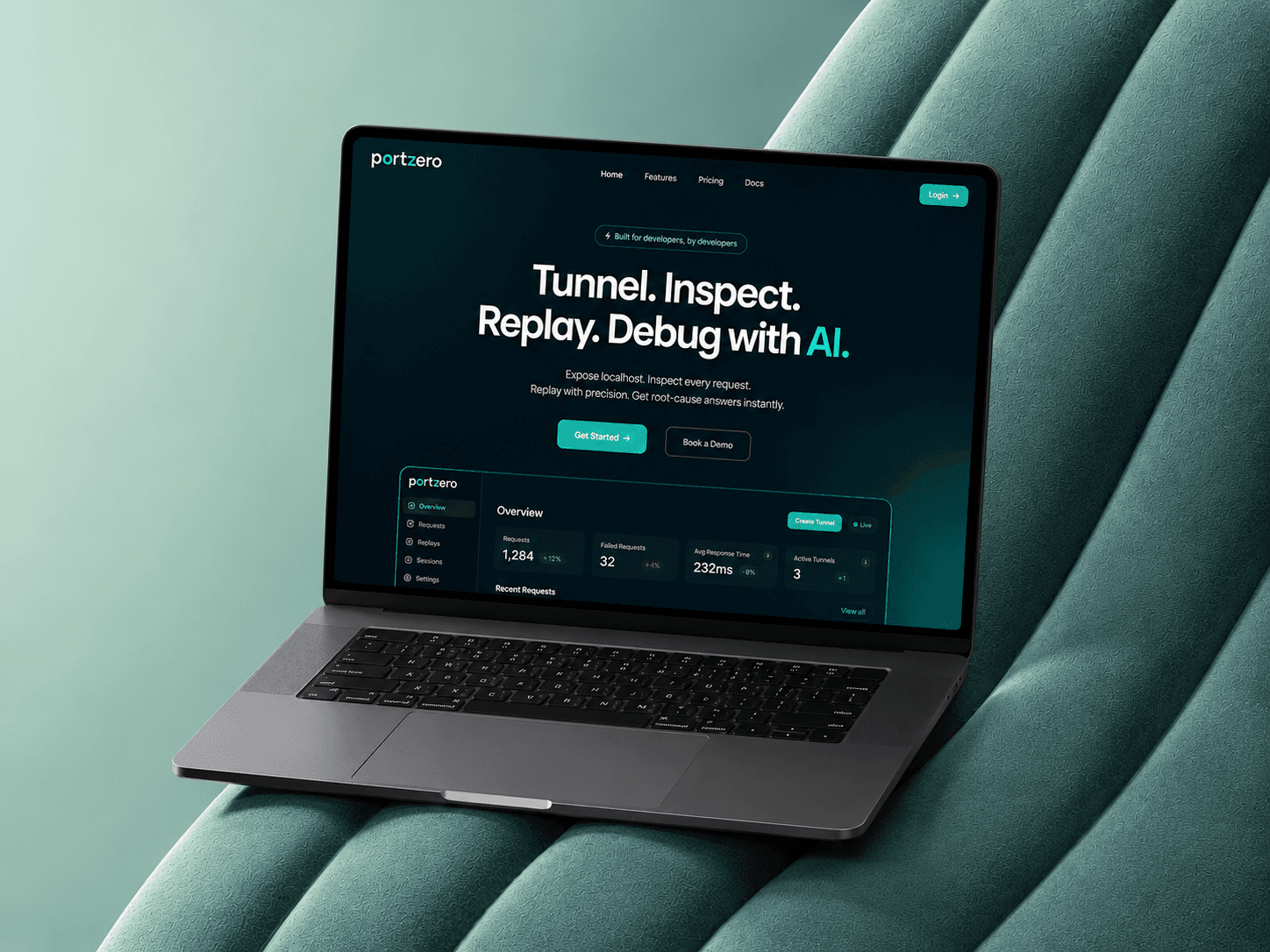
Tunnel.Inspect.Replay.DebugwithAI.
Debugging API failures collaboratively is still broken despite every tool available.
Developers stitch together ngrok for tunneling, Postman for request history, webhook.site for inspection, and Slack screenshots for team collaboration — four tools to debug one API failure. Replaying a failed webhook means manually reconstructing headers and body from logs. Sharing debugging context with a teammate requires screen sharing or copy-pasting curl commands. When an intermittent production issue appears, reproducing it locally is guesswork. Each tool solves one slice of the problem and none of them talk to each other.
A single platform: expose → inspect → replay → AI-debug → share with team.
Built a reverse-tunnel architecture in Go where the local agent initiates a persistent outbound WebSocket connection to the gateway — all inbound public traffic rides that connection back to the local machine with no firewall rules or port forwarding. Every request transiting the tunnel is captured in full (headers, body, timing, status) and surfaced in a real-time Next.js dashboard. The replay engine stores requests byte-for-byte and can fire them against any target with exact fidelity — making intermittent failure reproduction deterministic. An OpenAI/Gemini-powered AI layer analyzes failed requests, reads headers, response codes, timing patterns, and log context to generate instant root-cause explanations. Collaborative sessions let teams share a live debugging workspace via link — no screen sharing, with inline annotations and shared replay controls.
“By collapsing tunnel, inspector, replay, and AI debugging into one platform, PortZero eliminates the tool-switching overhead that turns a 5-minute debugging session into a 45-minute investigation.”
Engineering Core Principle